From a small garage to a certified, women-owned leader — every milestone reflects our growth, values, and vision for a sustainable future.
John V. Handrigan starts reconditioning milk and soda crates in Pawtucket, RI, later pivoting to barrels. Early success leads to growth opportunities.
John's son Earl joins and helps scale to 15 employees. Earl later enlists in the U.S. Army during WWII.
Earl returns from WWII after seeing how the army utilized pallets for effective transportation and logistics.
Earl pioneers pallet repair and quality control. Pallets become a sustainable and reusable shipping solution.
Earl improves recycling processes, reclaiming wood and maximizing salvage operations.
Company shifts to only wooden pallet recycling and moves to a larger facility in Central Falls, RI.
Atlas Barrel & Pallet is officially incorporated on December 5th.
Earl E. Handrigan brings a scientific approach through studying at URI and contributing to industry standards.
Earl E. helps form International Recyclers Pact (IRP), standardizing GMA pallet specs still in use today.
Earl E. becomes President & CEO after his father’s passing. Atlas relocates to a 65,000 sq. ft. facility on 16 acres in Northern RI.
Atlas scales from 1 to 3 semi-trucks and 45 trailers, increasing reach and logistics capacity.
Facility fully utilized; team grows to 40+ employees. Additional loading docks are installed and enhance efficiency.
Atlas benefits from NWPCA’s software that improves safety, cost-efficiency, and design accuracy.
Earl E. joins the NWPCA Board of Directors, furthering pallet standardization across the U.S.
Atlas becomes a founding member of First Alliance Logistics Management (FALM), offering integrated sourcing and recycling solutions.
Fleet expands to 85 trailers and 5 trucks leading to improved distribution network and boosts recycling.
ISPM 15 compliance achieved for global pallet shipping with in-house heat treatment.
Atlas now runs over 110 trailers and 8 trucks, with nearly 50 employees across growing facilities.
Earl E.’s daughter brings expertise in insurance and compliance to improve safety and efficiency.
Heather Ross becomes President & CEO, preparing Atlas for a new phase of growth and innovation.
Atlas Pallet remains committed to sustainable manufacturing and achieving net-zero goals.
Standard Barrel is founded by John V. Handrigan. Starting out of his garage in Pawtucket, Rhode Island, John initially reconditions milk and soda crates before pivoting to repairing barrels at a small workshop. Early success leads John and his partners to pursue growth opportunities.
John’s son, Earl V. Handrigan, joins the business, helping scale operations. The company has grown to 15 employees and runs four delivery trucks. That same year, they renamed the company Atlas Barrel to reflect their expanding ambitions. In the late 1930s, Earl enlists in the U.S. Army and is deployed during WWII.
Earl returns from World War II. Inspired by the Army’s logistics and supply chain innovations, he identifies a new opportunity—pallets—to revolutionize shipping and material handling back home.
Earl introduces pallets to Atlas Barrel, pioneering processes for pallet repair and consistent quality control. As WWII underscores the need for efficient shipping solutions, pallets prove to be a game changer—durable, reusable up to 10 times, and offering a sustainable, economical option for shipping goods.
Reflecting its evolving focus, the company is renamed Atlas Barrel & Pallet. Earl optimizes pallet recycling, reclaiming valuable components from worn units and transforming low-value wood into high-value products.
Atlas Barrel & Pallet pivots exclusively to recycling wooden pallets, capitalizing on the surge in demand driven by advancements in warehousing and logistics. To accommodate growth, Earl moves operations to a larger facility in Central Falls, Rhode Island.
On December 5th, Atlas Barrel & Pallet is officially incorporated as Atlas Barrel & Pallet, Inc.
Earl’s son, Earl E. Handrigan, steps into the business. While attending the University of Rhode Island, Earl E. applies a scientific approach to the pallet industry, developing internal processes and contributing to the creation of industry standards.
The International Recycled Pallet Association (IRP) is established, with Earl E. playing a key role. IRP focuses on standardization, including the development of GMA pallet specifications—frameworks still in use today. The association fosters industry growth and collaboration across the region.
Following the passing of Earl V. Handrigan, Earl E. becomes President & CEO. Under his leadership, Atlas relocates to a new 65,000 sq. ft. manufacturing facility on 16 acres in Northern Rhode Island, with easy highway access to support expansion.
Atlas grows its transportation fleet from one semi-truck and four trailers to three semi-trucks and 45 trailers, enabling broader service coverage and improved logistics.
Production expands to utilize all available space at the Northern Rhode Island facility. New loading docks are added to increase efficiency. The team grows to 40 employees as Earl E. continues driving innovation within the industry.
The Pallet Design System is introduced by the National Wooden Pallet and Container Association (NWPCA). As a member, Atlas benefits from advanced software that reduces client costs, minimizes product damage, and enhances safety through comprehensive pallet design analysis.
Earl E. Handrigan is elected to the NWPCA Board of Directors. His contributions help further standardize pallet manufacturing practices across the industry.
Atlas becomes an original member of First Alliance Logistics Management (FALM)—a national network of pallet manufacturers offering integrated pallet sourcing, logistics, and recycling solutions.
Atlas expands its fleet to 85 trailers and five semi-trucks, improving service efficiency along the East Coast and enhancing its recycling collection network with distribution centers and warehouses.
Atlas installs its first heat treat facility, ensuring compliance with ISPM 15 protocols for international shipping. This addition allows on-site heat treatment of pallets, expanding Atlas’ global service capabilities.
At the start of the new decade, Atlas continues steady growth. The company’s fleet exceeds 110 trailers and six semi-trucks, with nearly 50 employees supporting its expanding operations.
Heather Ross, Earl E.’s daughter, joins Atlas after raising four children. Drawing on her background in commercial insurance and worker’s compensation, Heather enhances operations, compliance, and workplace safety.
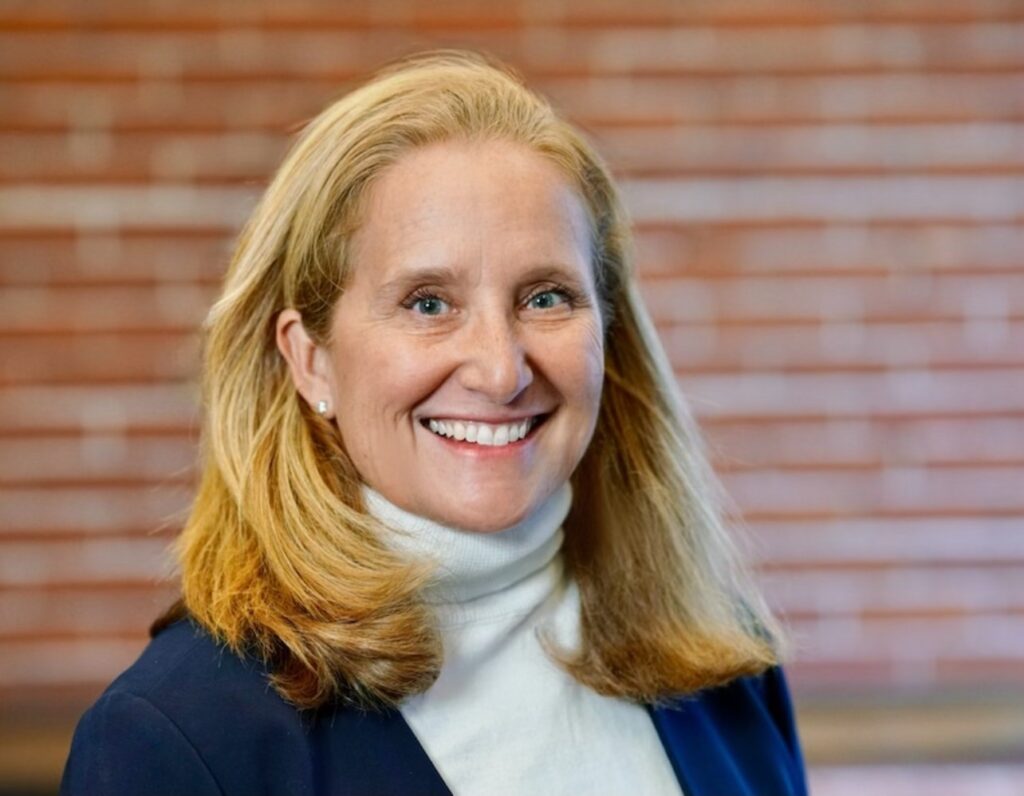
Heather Ross becomes President & CEO of Atlas Barrel & Pallet. After years of learning from her father and collaborating with industry leaders, she’s poised to lead Atlas into its next phase of growth.
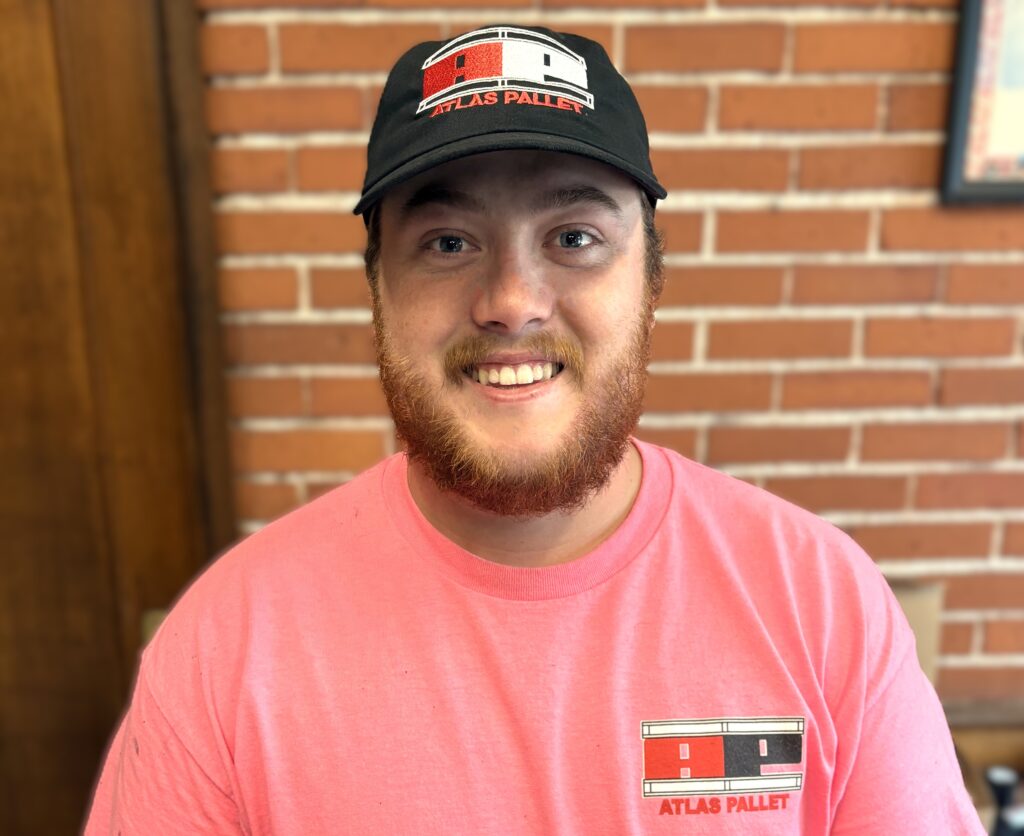
Heather’s son, Max Ross, joins Atlas full-time after completing his undergraduate and MBA studies at the University of Rhode Island. With a early career in logistics, management and a lifelong connection to the pallet industry, Max focuses on expanding Atlas’ recycling operations and closing the loop on the circular economy.
Today, Atlas Pallet continues to practice sustainable manufacturing, with a dedicated focus on advancing circular economy principles and achieving net-zero operations.
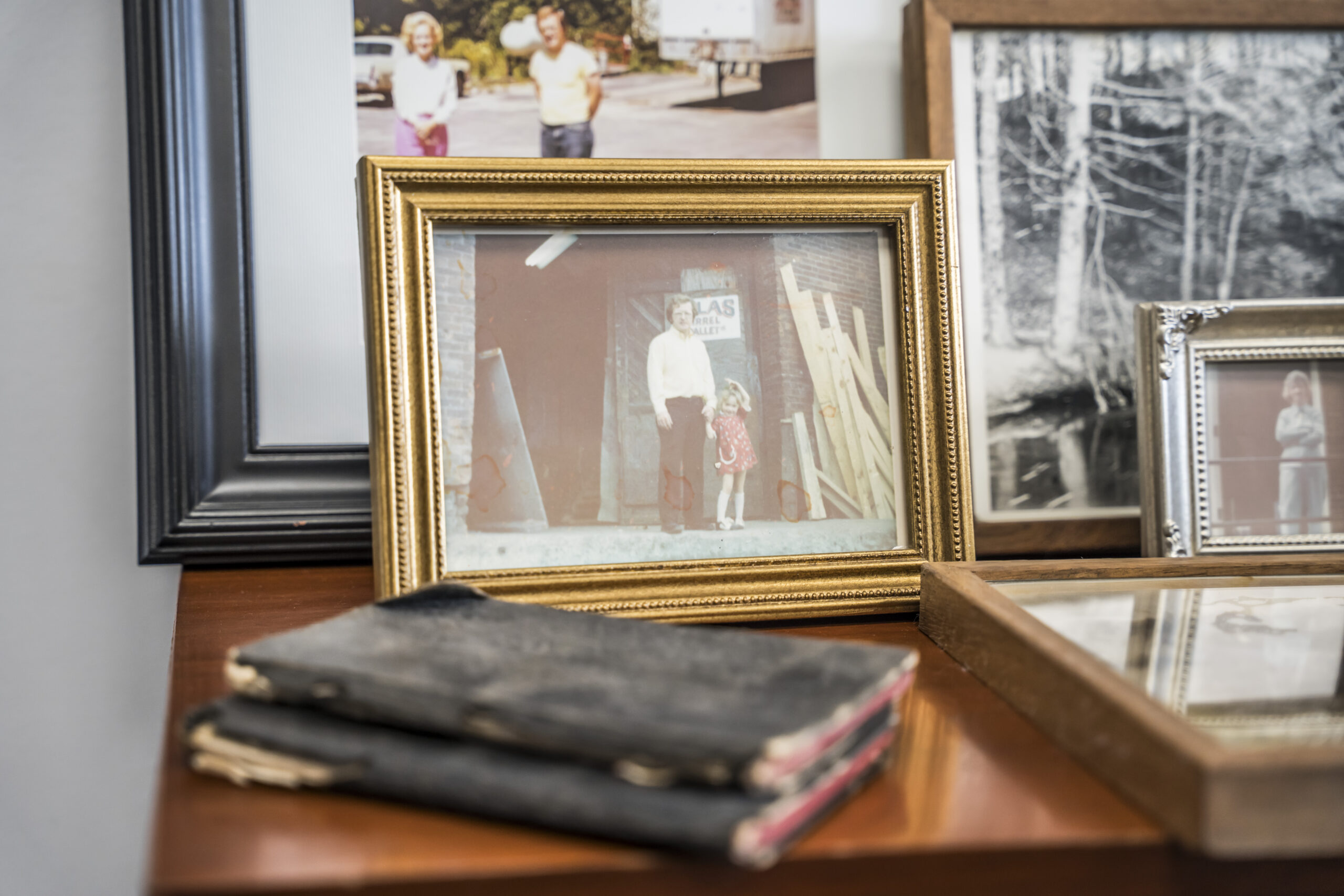
Atlas Pallet & Barrel was born from hard work, vision, and family values. In the early days, our founder worked out of a modest garage, driven by a simple mission — to repurpose and rebuild wood products with integrity. The image you see here is more than just a photo — it’s the foundation of who we are today.
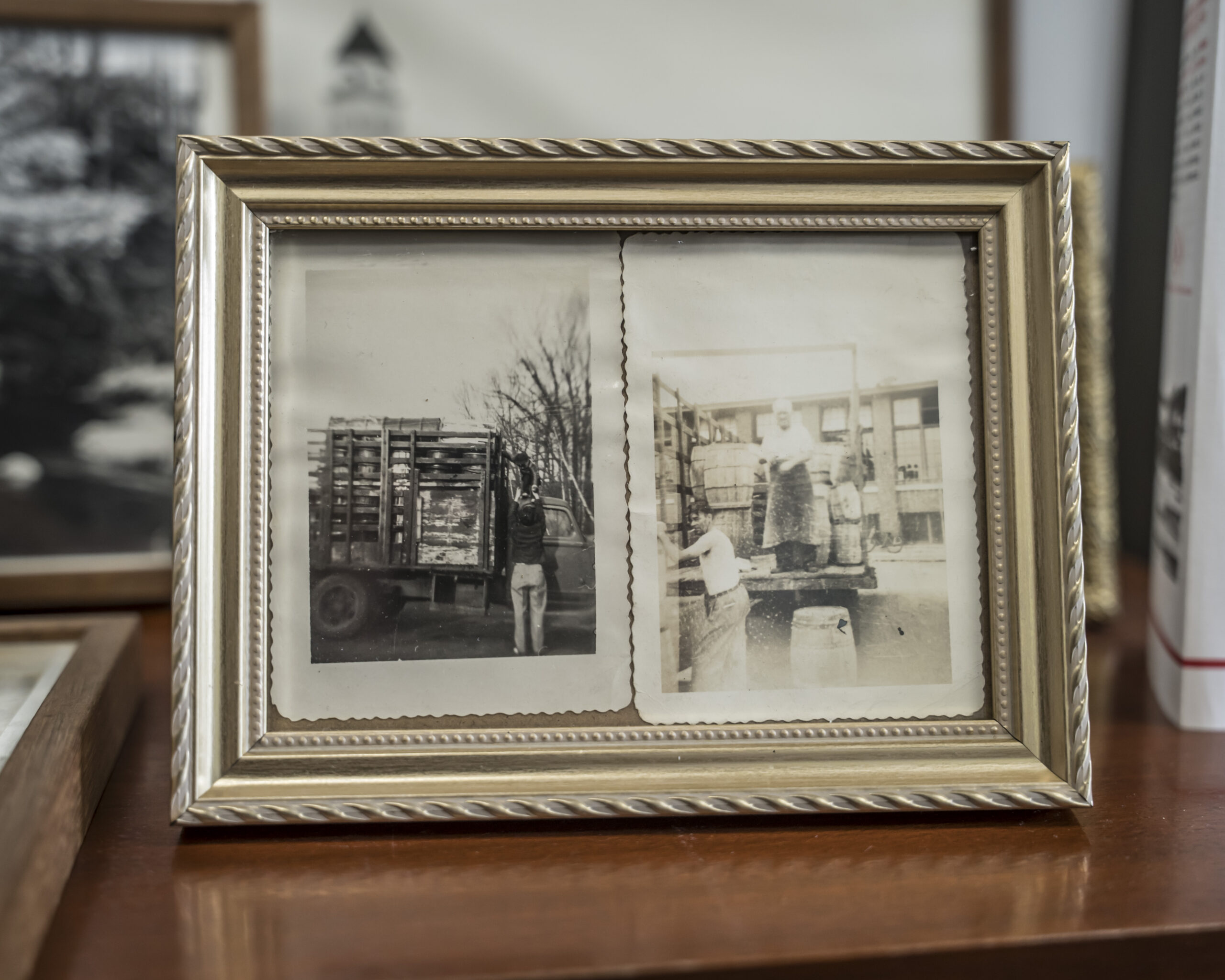

What started with a few tools and a strong work ethic has grown into a leading, certified business recognized for sustainability and quality. These early years taught us resilience, accountability, and the value of every customer. And though we’ve expanded, our roots — and values — remain the same.
From day one, Atlas has been a family-first business. Whether it was building pallets by hand or delivering to local partners, every moment was built on trust and dedication. That’s our founder standing beside his daughter — a quiet reminder that behind every piece of lumber was a legacy in the making.